
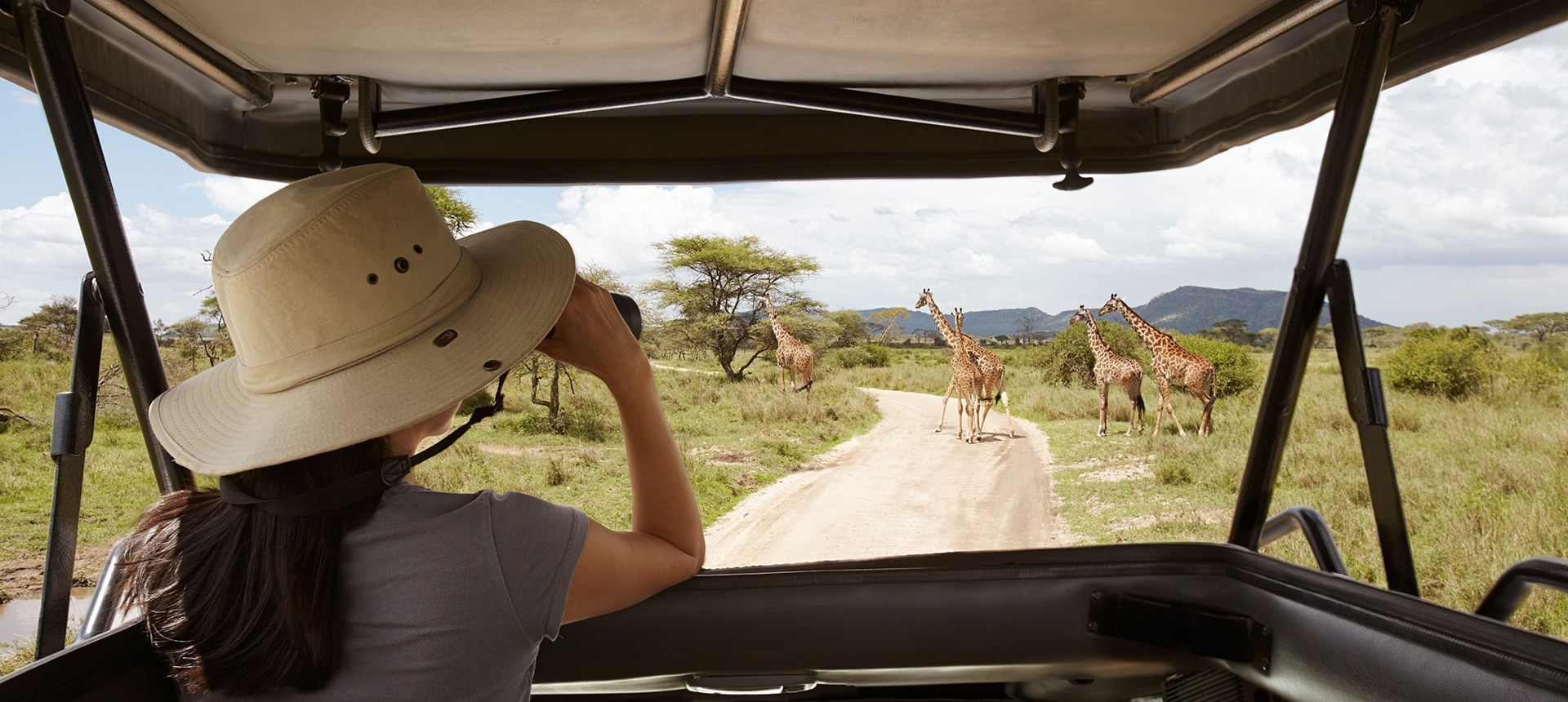
Self Drive Safaris in East Africa: The Independent Traveller's Guide to One-Way Rentals and Wild Camping
How to plan an unforgettable DIY wildlife safari across Kenya, Uganda, Tanzania and Rwanda — without a tour operator.
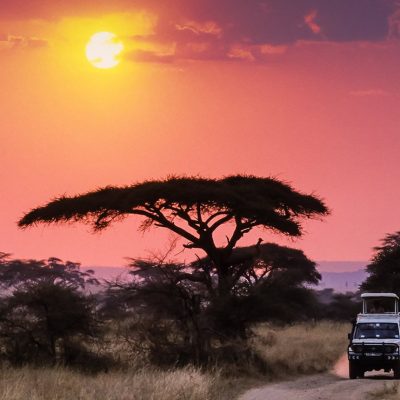
“There is a particular kind of freedom that arrives only when you kill the engine on a dirt track in the Serengeti, step out into the silence, and realise no guide is waiting for you — the decision of where to go next is entirely your own.”
The idea of driving yourself through the wild landscapes of East Africa still surprises many travellers. Most assume a safari means a shared Land Cruiser, a rigid itinerary, and a lodge dining room at seven o’clock. But a quietly growing movement of independent-minded adventurers is reclaiming the East African safari on their own terms — renting their own 4×4, plotting their own route through national parks, sleeping under canvas in wilderness campsites, and crossing borders with a one-way rental that opens up multi-country itineraries impossible to achieve any other way.
This guide is for those travellers. Whether you are researching a budget self drive safari Kenya to Tanzania, hunting for affordable one-way 4×4 rentals in East Africa, or simply wondering whether wild camping in Uganda’s national parks is actually legal (it largely is, in designated sites), you will find the practical information you need below.
Why choose a self-drive safari in East Africa?
The advantages of driving yourself are both financial and experiential. A guided private safari in East Africa can cost upward of USD 500–800 per person per day once you factor in park fees, accommodation, guide fees, and vehicle costs. A well-planned self-drive trip, by contrast, can come in at a fraction of that — particularly if you use public campsites inside national parks rather than private tented camps.
But cost is only part of the story. The real currency of a DIY safari is time. When you spot a cheetah coalition at dawn near the Mara River, you stay as long as you want. There is no other vehicle from your lodge demanding the driver return for breakfast. This unhurried relationship with wildlife sightings is something that experienced self drivers consistently describe as the defining difference.
“The real currency of a self-drive safari is not money — it is time. Time to wait. Time to watch. Time to let the bush unfold on its own terms.”
Which countries allow self-drive safaris?
Kenya Most visitor-friendly for self drivers. Excellent road infrastructure to Masai Mara, Amboseli and Samburu. Campsites well established.
Tanzania Serengeti, Ngorongoro and Tarangire are fully accessible. Longer distances; a high clearance 4×4 is essential. Camping inside parks is permitted.
Uganda Underrated self-drive destination. Queen Elizabeth National Park, Murchison Falls and Bwindi Impenetrable National Park are accessible independently. Gorilla permits still require a local operator.
Rwanda Compact, well-paved roads make it ideal as a first-time self drive country. Akagera National Park is excellent and often overlooked.
One-way 4×4 rentals: the game-changer for multi-country itineraries
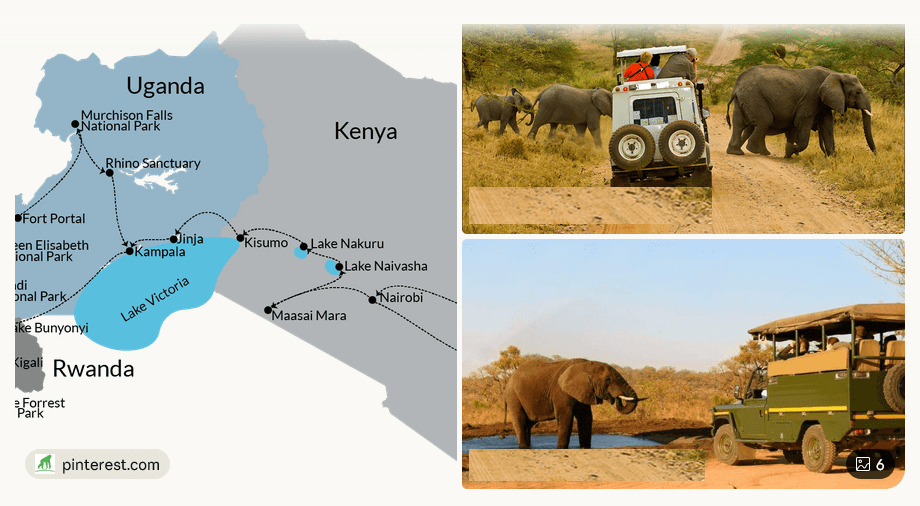
Perhaps the single biggest logistical innovation for independent safari travellers in recent years is the mainstream availability of one-way car rentals between East African countries. Rental companies based in Nairobi, Kampala, Dar es Salaam, and Kigali now routinely offer cross-border safaris, allowing you to pick up a vehicle in one city and drop it in another.
A classic example: fly into Nairobi, collect your 4×4, drive the Masai Mara, cross into Tanzania at the Isebania border, traverse the Serengeti and Ngorongoro, exit at Namanga back into Kenya, and drop the vehicle at Jomo Kenyatta Airport. This kind of Kenya to Tanzania self drive loop itinerary is increasingly common and logistically straightforward with the right rental agreement.
When booking a one-way rental for a cross-border East Africa safari, confirm the following before you sign anything: that the rental agreement explicitly names each country you will enter; that the vehicle comes with the relevant cross-border permit, typically called a COMESA or TZ/KE border letter; that comprehensive insurance covers you across all named territories; and that a rooftop tent or camping kit is included if you plan to sleep in national parks.
Practical tip — one-way drop fees
Most companies charge a one-way drop fee ranging from USD 100–300 depending on the distance between collection and drop-off points. Always negotiate this as part of the total hire cost, particularly on longer itineraries of 14 days or more, where rental companies have more flexibility.
For the best rates on long-term 4×4 hire for wildlife camping in East Africa, approach rental companies directly rather than through booking aggregators — you will often find 15–25% lower rates and more flexibility on insurance terms.
Camping in the wilderness: what independent safari travellers need to know
Sleeping inside a national park — waking to hyena calls, watching elephant silhouettes move past the tent at three in the morning — is one of the foundational experiences of a DIY East African safari. Most major parks in Kenya and Tanzania operate both public campsites (basic, with pit latrines and often a water point) and special campsites (exclusive sites, no facilities, bookable in advance and significantly more remote).
Public campsites are priced affordably and represent extraordinary value. In the Serengeti, for example, a public campsite costs around USD 30–40 per person per night, compared to USD 300–600 at a permanent tented camp. In Murchison Falls in Uganda, riverine public campsites sit close enough to the Nile that hippos are a regular nocturnal presence.
For those seeking the most immersive experience, Uganda’s special forest campsites near Bwindi Impenetrable National Park offer roadless wilderness nights that few independent travellers ever discover. These sites, managed by Uganda Wildlife Authority, must be booked well in advance and require a self-sufficient setup — all water, food, and waste management is your responsibility.
A rooftop tent mounted on your rental 4×4 is the practical solution most self drivers prefer. It keeps you elevated and secure, eliminates the need to source camping furniture, and takes less than four minutes to deploy. Many East African rental companies now include a rooftop tent as standard equipment on vehicles marketed toward independent camping safari travellers.
Wildlife highlights accessible to self drive travellers
The Masai Mara and Serengeti ecosystem remains the headline destination for good reason. The wildebeest migration, which moves in an enormous annual circuit between the two parks, is fully accessible to self drivers — and the experience of watching a river crossing with only your own vehicle at the bank is something that group safaris rarely replicate. For self drive wildebeest migration viewing without a guide, July through October offers the best crossing action along the Mara River.
Beyond the famous parks, independently minded travellers are increasingly drawn to less-visited destinations where game viewing is excellent and vehicle numbers are low. Tanzania’s Ruaha National Park, Uganda’s Kidepo Valley, and Kenya’s Laikipia Plateau all reward travellers willing to do a little extra driving. These destinations rarely feature in packaged itineraries, which is precisely what makes them compelling.
Practical matters: permits, navigation, and fuel
Park entry fees in East Africa are paid electronically in Kenya (via the eCitizen portal) and increasingly by card in Tanzania. Download offline maps for your route before you leave — Google Maps offline works reasonably well for main roads, but for park tracks, dedicated apps such as Maps.me or iOverlander are significantly more reliable and include user-submitted campsite reviews and road condition reports.
Fuel planning deserves serious attention. In remote areas of Tanzania and Uganda, the distance between reliable fuel stations can exceed 200 kilometres. Carry a jerry can of at least 20 litres as a reserve, and fill up whenever you drop below half a tank. Most 4×4 self-drive tours in the region come with a 90-litre tank, giving a conservative range of around 600–700 kilometres on mixed terrain.
Is a self-drive safari right for you?
Not every traveller is suited to it. If you are uncomfortable with navigation uncertainty, have no experience driving a manual 4×4 on loose sandy tracks, or prefer the convenience of someone else handling logistics, a car hire with a driver remains the better choice. But if you are an experienced independent traveller who finds joy in unscripted decisions, the self-drive East Africa safari — particularly one threaded across multiple countries on a one-way rental — offers a depth of encounter with the landscape and its wildlife that few other travel formats can match.
The animals do not know you hired the car yourself. The sunsets look the same from your rooftop tent as from any lodge deck. But the silence between the sounds — that particular silence of a wilderness evening when no other vehicle is nearby, when the choices of tomorrow are entirely your own — that belongs only to those who drove themselves here.
Most Popular
- All Posts
- Car Rentals
- Featured
- Gorilla Safaris
- Reviews
- Wildlife Tours
Inspiring New Talent
It presents a wrist-hugging oval of gold, punctuated with.
