Rwanda vs Uganda Gorilla Trekking Permits: Costs, Booking & Tips 2026
The Basics
What is a gorilla trekking permit?
A gorilla trekking permit is a government-issued authorization that grants you access to visit a habituated mountain gorilla family in the wild. Because these populations are critically endangered — with fewer than 1,100 individuals remaining worldwide — access is strictly limited to protect them from human disturbance and disease. Each permit covers a single guided trek, typically lasting 2 to 8 hours, and includes one precious hour in the presence of a gorilla family.
Permits must be purchased through official channels: Uganda Wildlife Authority (UWA) for Uganda, or the Rwanda Development Board (RDB) for Rwanda. Both countries also work with accredited tour operators. Permits cannot be transferred, and they sell out months in advance during peak season — so planning early is essential.
Country Comparison
Rwanda vs. Uganda: which to choose?
Both destinations, Volcanoes National Park in Rwanda and Bwindi Impenetrable Forest in Uganda offer extraordinary Mountain gorilla trekking encounters. The difference is significantly in price for each country, the landscapes of the National Parks, and logistics. Your choice will shape not just your trekking adventures, but your entire itinerary.
🇷🇼 Rwanda
🇺🇬 Uganda
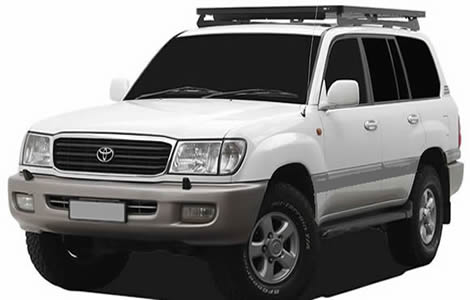
Uganda’s lower permit price makes it the more budget-friendly option — but the long overland journey means most visitors rent a self-drive 4×4 or book a driver-guide for the multi-day trip to Bwindi.
Step-by-Step
How to book your permit
Choose your country and park; Decide between Rwanda’s Volcanoes National Park and Uganda’s Bwindi Impenetrable Forest or Mgahinga Gorilla National Park. Consider your budget, available time, and whether you want a luxury short-haul or a longer adventure. In Uganda, Bwindi has four trekking sectors — Buhoma, Ruhija, Rushaga, and Nkuringo — each with different gorilla families and terrain.
Pick your trek date (book early); Gorilla trekking permits are limited to eight visitors per gorilla family per day. For peak season (June–September and December–January), permits sell out 6–12 months in advance. The dry seasons offer easier trails and better photography conditions, but the wet season (March–May, October–November) is quieter, cheaper for accommodation, and lush with greenery.
Purchase through official channels; For Rwanda: book directly through the Rwanda Development Board website at rdb.rw, or through a licensed tour operator. For Uganda: contact the Uganda Wildlife Authority at UWA, or use an accredited tour operator. Payment is typically in USD. Operators often bundle permits with accommodation and transport, which can simplify planning considerably.
Arrange your transport and accommodation; This step is where many travelers underestimate the logistics. In Rwanda, Volcanoes NP is a manageable drive from Kigali — but the road to the park headquarters winds through highland terrain that calls for a capable vehicle. In Uganda, the journey to Bwindi crosses the equator and climbs through dramatic highland landscapes. A reliable self-drive 4×4 or a hired driver-guide is not just a convenience — it’s a necessity.
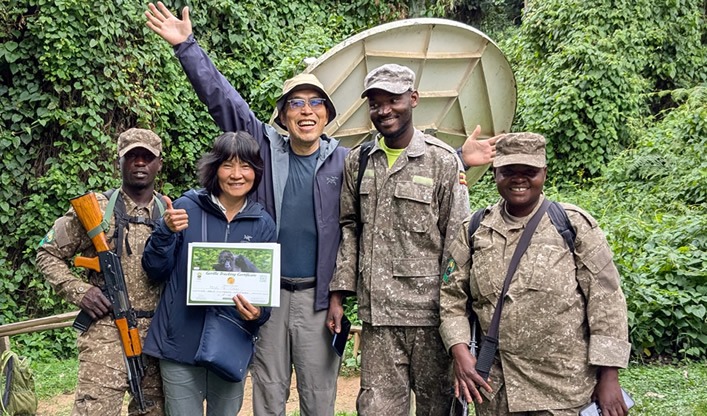
Prepare for trek day; Arrive at the park briefing point by 7:30 AM. Bring long waterproof trousers, sturdy hiking boots, gardening gloves (for gripping through nettles), a rain jacket, and plenty of water. Altitude can reach 2,300–3,000m depending on where the gorillas range that day. A porter can be hired on-site to carry your bag and provide extra support — a great way to support local communities too.
When to visit – Timing your gorilla trek
Practical advice
Insider tips for a perfect trek
Health requirements
Anyone with flu, cold, or gastric symptoms must step back — for the gorillas’ safety. Masks are often mandatory. Check Rwanda and Uganda’s current entry health requirements before booking flights.
No refunds policy
Permits are non-refundable if you cancel. Rwanda allows date changes with advance notice. Travel insurance that covers permit costs is strongly recommended before purchase.
Age & fitness
Minimum age is 15 in Rwanda and Uganda. No maximum age, but fitness matters — treks can last 8 hours over steep terrain. Speak to your doctor and be honest with your guide about your fitness level.
Photography rules
No flash photography. Keep at least 7 metres distance from the gorillas. Phones and cameras are welcome. Video is allowed. Some tour operators provide specialist wildlife photography guides.
Habituation permits
Uganda offers a rare “gorilla habituation experience” — a full day with a gorilla family still being accustomed to humans. Limited to four people, it costs $1,800 and is one of the most raw wildlife encounters on earth.
Combine with a safari
Uganda’s location makes it ideal for combining gorilla trekking with Queen Elizabeth NP (tree-climbing lions, hippos) or Murchison Falls. Rwanda pairs naturally with Akagera NP for a Big Five experience.
Getting there
The road to the gorillas
Reaching the gorilla parks is part of the adventure — and your choice of transport defines the experience. In Rwanda, Volcanoes National Park is roughly 115 km from Kigali, but the road climbs steeply through the Virunga highlands and demands a capable vehicle. In Uganda, the journey from Kampala to Bwindi covers over 500 km of varied terrain: smooth highway, red-dust murram roads, and misty highland passes.
Most visitors choose between three options: a guided safari vehicle with a driver, a hired private car with driver, or a self-drive rental. Self-driving is increasingly popular with experienced travellers who want the freedom to stop at roadside markets, detour to crater lakes, and arrive on their own schedule. A 4×4 with high clearance is non-negotiable — the roads around Bwindi especially reward those who come prepared.
Drive to the gorillas in comfort & confidence
Whether you’re heading to Bwindi or Volcanoes National Park, we have the right 4×4 for your trip — with GPS, full insurance, and local road knowledge built in. Self-drive or with a driver, we’ll get you there ready to trek.