
4×4 Vehicle Options for Uganda Self-Drive Safaris from Kigali
Choosing the right vehicle is one of the most important decisions for your Uganda self-drive safari car hire. Roads inside Uganda’s parks range from smooth murram tracks to deeply rutted mud trails requiring full four-wheel drive. Below is a guide to our vehicle categories and approximate daily rates.
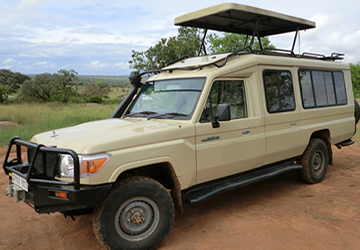
Toyota Land Cruiser: The Best 4×4 for Self-Drive Safaris in Uganda
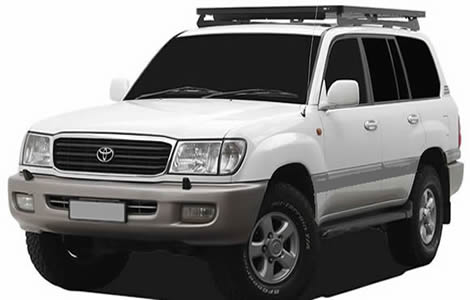
The Toyota Land Cruiser is the gold standard for African safari travel. Its rugged construction, high ground clearance, and proven reliability make it the top choice for self-drive Land Cruiser hire in Uganda. Older Series 70 and 80 models are especially practical for remote travel due to their mechanical simplicity. We stock both manual and automatic transmissions, in three-door and five-door configurations.
The five-door model suits groups of four or more on a Uganda camping safari, while the three-door hardtop is popular with couples and solo travelers seeking a more compact, fuel-efficient option.
Toyota RAV4 and Smaller 4×4s: Budget-Friendly Car Hire for Accessible Parks
For budget-conscious travelers hiring a car for Uganda national parks with better road access—such as Lake Mburo, Kibale, and the main Queen Elizabeth circuit—a Toyota RAV4 offers all-wheel drive capability at a lower daily rate. Not suitable for rooftop tents or challenging routes such as Ishasha or Kidepo.
What Is Included in Every Rental
- Comprehensive third-party vehicle insurance
- 24-hour emergency breakdown support
- Full tool kit and vehicle jack
- Two spare tires (Land Cruiser models)
- 20-liter jerry can for fuel storage
- Vehicle recovery sand tracks (long-range bookings)
- Detailed Uganda road map and national park guide
- Child seat available on request at no extra charge
- Pre-departure vehicle orientation and briefing
Gorilla Trekking in Uganda: Bwindi and Mgahinga
Gorilla trekking on a self-drive safari in Uganda is widely considered one of the greatest wildlife experiences in Africa. Uganda is home to more than half of the world’s remaining mountain gorillas, and trekking to observe a habituated gorilla family in its natural forest environment is a profoundly moving encounter. Self-drive visitors to Bwindi Impenetrable National Park and Mgahinga Gorilla National Park can access both parks independently—though Bwindi is far larger, with more gorilla groups and more trekking permits available.
Bwindi Impenetrable National Park
Bwindi covers 321 square kilometers of ancient montane rainforest in the Albertine Rift Valley in southwestern Uganda, home to over 120 mammal species, 348 bird species, and 220 butterfly species alongside its mountain gorillas. The park has four trekking sectors: Buhoma (the most established), Ruhija (difficult terrain, high encounter success rate), Rushaga (the largest, with the most gorilla groups), and Nkuringo (stunning Congo views, challenging trek). All four sectors are accessible on a self-drive Uganda gorilla trekking trip, though conditions vary and a 4×4 is essential for all of them.
A gorilla trekking permit in Uganda costs $800 for foreign non-residents, $700 for foreign residents of Uganda, and $500 for citizens of African countries outside East Africa. Permits must be booked well in advance—particularly for the peak months of June, July, August, and December. We strongly recommend booking at least three to six months ahead.
Mgahinga Gorilla National Park
Uganda’s smallest park at just 33.7 square kilometers, Mgahinga sits in the extreme southwest bordering Rwanda and the DRC. It protects one habituated gorilla group and offers a unique trekking experience through dramatic volcanic landscapes. The park also offers golden monkey trekking in Mgahinga—a wonderful and often overlooked activity.
Queen Elizabeth National Park: Uganda’s Most Diverse Wildlife Park
Covering approximately 1,978 square kilometers, Queen Elizabeth National Park is Uganda’s most visited wildlife reserve and one of East Africa’s most diverse safari destinations. Situated in western Uganda, the park encompasses savannah, wetlands, forests, and the Kazinga Channel—a 32-kilometer natural waterway connecting Lake Edward and Lake George.
Self-drive game drives in Queen Elizabeth National Park on the main Kasenyi Plains circuit are very rewarding, with reliable sightings of elephants, Uganda kob, buffalos, warthogs, and lions. The park holds 95 mammal species and more than 600 bird species—making it a top destination for a birdwatching self-drive safari in Uganda.
The Ishasha sector’s tree-climbing lions in the southern part of the park are famous throughout Africa. The lions have developed the rare habit of resting in large fig trees during the heat of the day—a wildlife spectacle found in very few places worldwide. The drive to Ishasha requires a capable 4×4, and the tracks here are rougher than the main circuit, adding to the sense of adventure.
Kibale National Park: Best Place in Africa for Chimpanzee Trekking
Kibale National Park protects 766 square kilometers of lush evergreen rainforest in western Uganda. It is widely regarded as the best destination in Africa for a self-drive chimpanzee trekking safari, with an estimated population of over 1,500 chimpanzees and 13 primate species in total.
Chimpanzee trekking in Kibale typically involves a guided forest walk of two to three hours. Kibale also offers the full-day Chimpanzee Habituation Experience (CHEX)—a remarkable, intimate opportunity to spend an entire day with a group still being habituated to human presence.
Fort Portal, the nearest town, is a charming highland base surrounded by Rwenzori Mountains and crater lakes. The road from Kampala to Fort Portal is fully paved, making it straightforward for any 4×4. Self-drive visitors hiring a car for Kibale chimpanzee trekking will find this one of the most accessible parks in Uganda.
Murchison Falls National Park: Uganda’s Largest Park
Murchison Falls National Park covers approximately 3,840 square kilometers in northwestern Uganda and is the country’s largest protected area. The Victoria Nile drops dramatically through a narrow six-meter gorge to create Murchison Falls—one of the most powerful waterfalls in the world. The falls can be viewed from the top by vehicle and from the bottom on a Nile boat cruise.
The north bank game-viewing circuit supports large populations of elephants, Rothschild’s giraffes, Cape buffalos, Uganda kobs, lions, and leopards. A boat cruise from Paraa to the base of the falls is an unmissable experience, bringing you within meters of hippos, Nile crocodiles, and the rare shoebill stork.
Self-drive car hire to Murchison Falls from Kampala is one of the most popular routes, with the journey taking approximately four to five hours via Gulu. The main park tracks are navigable on a 4×4 throughout most of the year, and the park is well-served by public campsites along the Nile.
Lake Mburo National Park: Uganda’s Closest Park to Kampala
Lake Mburo National Park occupies 370 square kilometers in western Uganda, just a few hours’ drive from the capital. It is the ideal first or last stop on a self-drive Uganda safari from Kampala, providing an accessible and rewarding introduction to Ugandan wildlife.
Lake Mburo is the only park in Uganda where zebras and impalas are found, alongside large numbers of hippos, crocodiles, elands, topis, and buffalos, plus over 350 bird species. Unlike Uganda’s larger parks, Lake Mburo also permits horseback safaris and guided walks, adding variety to your visit.
The park’s compact size and relatively smooth tracks make it manageable for less experienced self-drive safari visitors in Uganda, though a 4×4 is still recommended for some lakeshore trails. The Rwonyo campsite is one of the most atmospheric public campsites in Uganda, with hippos grunting through the night and impala grazing around the tents at dawn.
Kidepo Valley National Park: Uganda’s Remote Wilderness Safari Destination
Kidepo Valley National Park occupies 1,442 square kilometers of semi-arid savannah in Uganda’s far northeast, close to the borders with Sudan and South Sudan. It supports over 77 mammal species—including cheetah, caracal, bat-eared foxes, and Burchell’s zebra, found nowhere else in Uganda—and a bird list exceeding 475 species, making it one of Africa’s great undiscovered safari destinations.
The journey from Kampala is approximately 700 kilometers and nine to ten hours of driving, requiring a capable long-range 4×4 rental with good ground clearance. The effort is richly rewarded: Kidepo Valley self-drive safaris offer game drives with far fewer other vehicles, and camping at Apoka beneath a vast open sky is a highlight of any Uganda self-drive trip.
Practical Tips for a Self-Drive Safari in Uganda
Best Time to Visit
Uganda can be visited year-round. The main dry season for self-drive safaris in Uganda runs from June to September, with a shorter dry period in December and January offering the most comfortable driving and reliable wildlife viewing. Gorilla trekking is possible year-round, though the rainy seasons (March–May and October–November) can make forest trails slippery and some park roads challenging even with a 4×4.
Road Conditions
Main highways connecting Kampala to Mbarara, Fort Portal, and Gulu are paved and in reasonable condition. However, roads inside most national parks are unpaved murram tracks that deteriorate significantly in heavy rain. A 4×4 with good ground clearance is essential for self-drive travel in Uganda’s national parks. Always carry extra fuel when heading to remote parks such as Kidepo, where fuel stations are scarce.
Crossing the Border from Rwanda
The Katuna/Gatuna border crossing is open seven days a week. Most nationalities require a valid passport and a Uganda visa, which can be applied for online in advance or purchased on arrival. Allow one to two hours for the crossing and ensure all cross-border vehicle documentation is in order before departure — we handle all of this for clients booking a cross-border 4×4 rental from Rwanda to Uganda through us.
Gorilla Permit Booking
Gorilla permits must be booked in advance through the Uganda Wildlife Authority or a licensed operator. Permits are priced at $800 per person for foreign non-residents and are often fully booked months ahead during peak travel. Book your Uganda gorilla trekking permit at least three to six months in advance, particularly for June–September and December travel.
Budget Self-Drive Safari Tips for Uganda
Uganda is one of East Africa’s most affordable safari destinations, and a budget self-drive camping safari in Uganda dramatically reduces costs compared to guided lodge tours. Practical ways to save:
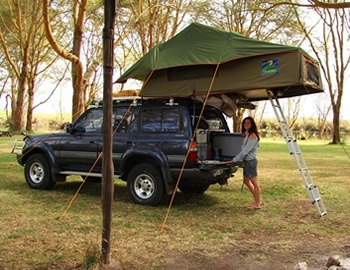
- Choose a rooftop tent rental: Public park campsites cost $10–$30 per person per night versus $100–$500 for mid-range to luxury lodges.
- Self-cater where possible: Stock food in Kampala or Fort Portal before entering the parks. Camp kitchens are simple but effective.
- Combine parks on a circuit: Plan a loop through multiple parks rather than returning to base between each. This cuts fuel costs and maximizes brush time.
- Travel in the shoulder season: May, October, and November offer fewer tourists and lower accommodation costs, with lush green landscapes—though some roads may be muddy.
- Opt for a smaller 4×4 for accessible parks: For itineraries focused on Lake Mburo and Queen Elizabeth’s main circuit, a budget RAV4 hire in Uganda is a more economical choice than a full Land Cruiser.
- Book permits early: Gorilla permits are non-refundable, but booking far ahead avoids premium pricing through third-party operators.
- Consider a long-term hire discount: If your Uganda self-drive safari is 14 days or longer, ask about our long-term rental rates for significant daily savings.
Conclusion: Uganda Is East Africa’s Finest Self-Drive Safari Destination.
Uganda offers a self-drive safari experience unmatched in East Africa for variety, intimacy, and value. Within a single trip, you can trek through primeval forest to encounter mountain gorillas in Bwindi; watch tree-climbing lions in the golden grasslands of Ishasha; cruise the Kazinga Channel past enormous hippo pods; track chimpanzees through Kibale’s rainforest canopy; and stand at the edge of Murchison Falls as the entire Nile hurls itself through a narrow rock gorge. Add the dramatic remote wilderness of Kidepo Valley and the peaceful lakeside serenity of Lake Mburo, and you have a safari destination of extraordinary richness.
Whether you are looking for a one-way 4×4 car hire from Kigali to Kampala, a budget rooftop tent camping safari in Uganda’s national parks, a long-term self-drive rental for a multi-week East Africa road trip, or simply the best value Land Cruiser hire for gorilla trekking in Bwindi, our fleet of well-maintained vehicles—complete with full camping equipment and comprehensive 24-hour support—is at your disposal.
Contact us today to discuss your Uganda self-drive safari and let us help you plan the trip of a lifetime.
Most Popular
- All Posts
- Car Rentals
- Featured
- Gorilla Safaris
- Reviews
- Wildlife Tours
Post Category
Post Tag
We’ve got budget-friendly options ready for pickup the moment you land, including reliable models like the Toyota RAV4 and Hyundai Santa Fe—perfect for city transfers and highland road trips alike.
We’ve got budget-friendly options ready for pickup the moment you land, including reliable models like the Toyota RAV4 and Hyundai Santa Fe — perfect for city transfers and highland road trips alike.
We’ve got budget-friendly options ready for pickup the moment you land, including reliable models like the Toyota RAV4 and Hyundai Santa Fe — perfect for city transfers and highland road trips alike.
We’ve got budget-friendly options ready for pickup the moment you land, including reliable models like the Toyota RAV4 and Hyundai Santa Fe — perfect for city transfers and highland road trips alike.
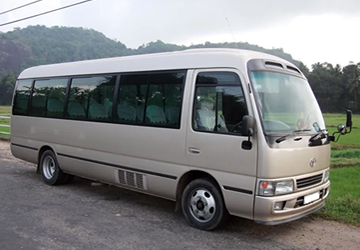
Coaster 24 Seater
We’ve got budget-friendly options ready for pickup the moment you land, including reliable models like the Toyota RAV4 and Hyundai Santa Fe — perfect for city transfers and highland road trips alike.